Math Meets Art: Creating Visual Designs Through Functions
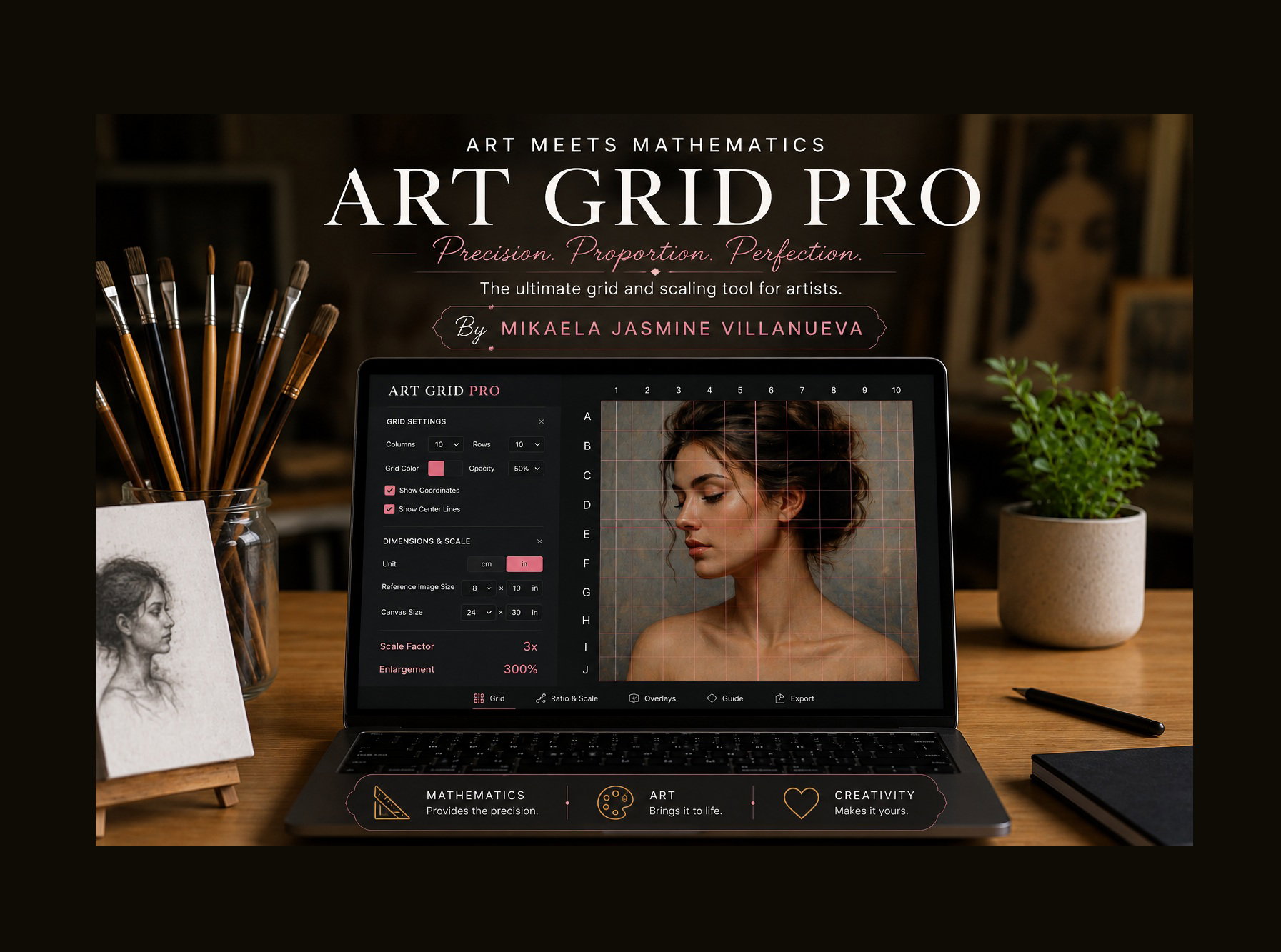
A STEAM
(Science, Technology, Engineering, Arts, and Mathematics)
Project Authorship by Mikaela Jasmine Villanueva
Exploring the Creative Connection Between Mathematics and Visual Design
Introduction
As an Arts and Design student, I’ve always been fascinated by how creativity and mathematics can work together. In this project, I explore how mathematical functions such as linear, quadratic, exponential, logarithmic, and trigonometric equations can be transformed into artistic designs. By graphing equations and applying transformations like stretching, shifting, reflecting, and scaling, I want to show how math can shape the patterns, symmetry, and visual balance found in both digital and traditional artworks.
Through this study, I will create original artworks inspired by different mathematical functions and compare how each equation produces unique visual effects. This project allows me to combine two things I enjoy art and problem‑solving while discovering how mathematics can enhance creativity, precision, and visual storytelling.
Project Rationale
Many people think that mathematics and art are completely different subjects, but they actually have a lot in common. Both use patterns, shapes, balance, and creativity to create something meaningful. In General Mathematics, we learn about functions, graphs, transformations, and other concepts that can also be seen in artworks and designs.
This project aims to explore how mathematical functions can be used to create visual art. By experimenting with different equations, graphs, and transformations, I can create unique patterns and designs while learning how mathematics works in a creative way. Small changes in a function can produce different shapes and effects, showing how math can influence artistic expression.
Through this project, I hope to demonstrate that mathematics is not only useful for solving problems but can also be a valuable tool for creativity. By combining art and mathematics, I can better understand both subjects and show how they work together to create visually appealing and meaningful designs.
The ARTIST-GRID
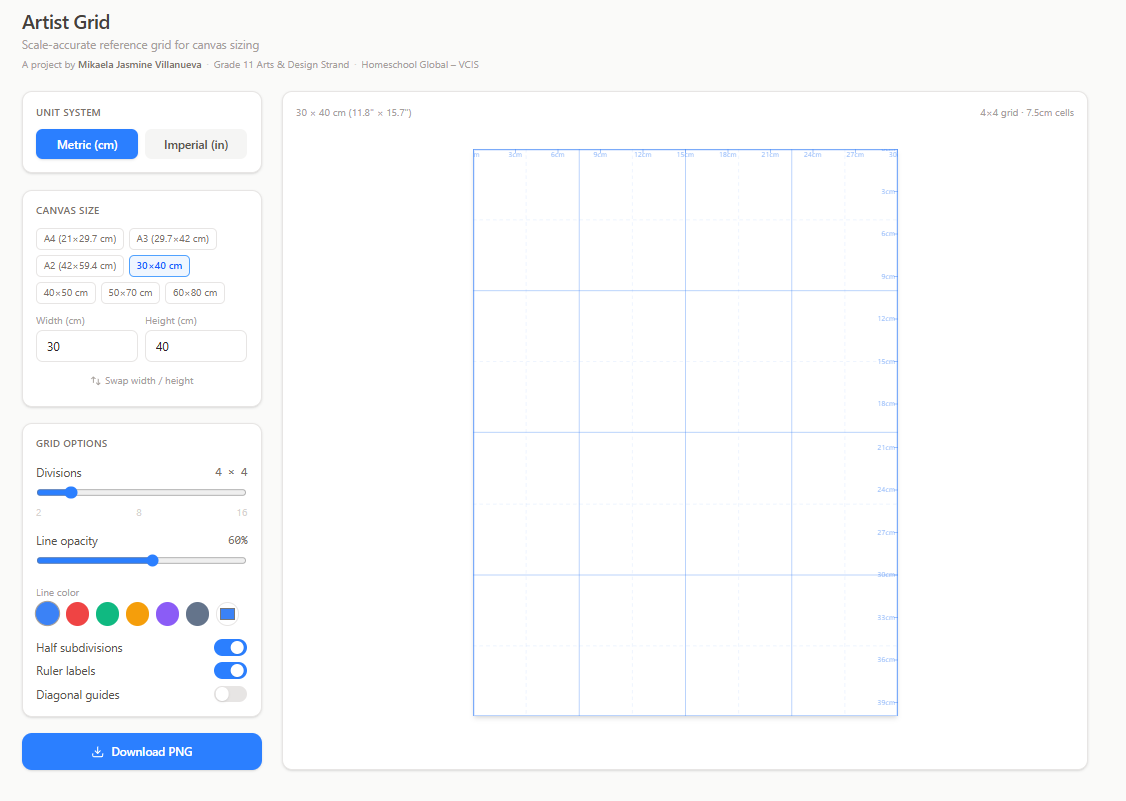
ARTIST-GRID is a web-based art and mathematics application created by Mikaela Jasmine Villanueva. The project combines General Mathematics concepts with visual art by helping artists use grids, proportions, ratios, scaling, and composition guides to accurately transfer and enlarge images for drawing and painting.
The application features customizable grid generators, coordinate mapping, enlargement and scale calculations, aspect-ratio tools, and composition overlays such as the Rule of Thirds and Golden Ratio. It demonstrates how mathematical principles can be applied in artistic practice, making it both a creative and educational tool for students, illustrators, and visual artists.
As a Grade 11 Arts and Design project, MJV Art Grid Pro highlights the connection between mathematics and creativity, showing how functions, proportions, and visual structure can support artistic accuracy, design, and visual storytelling.
Table on Study Summary
| Artwork Type | Function Used | Medium | Key Math Concept | Visual Goal |
|---|---|---|---|---|
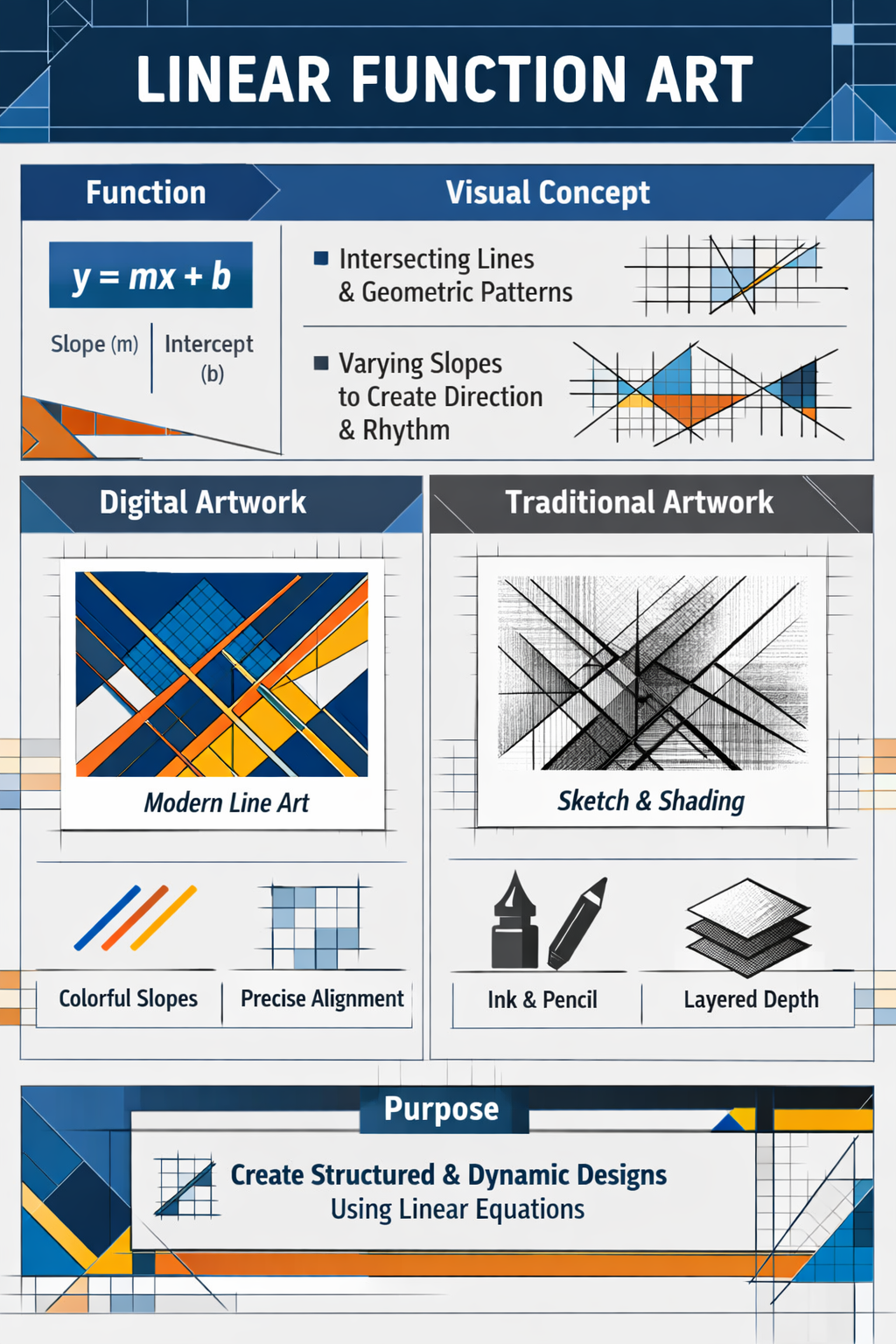
| Linear Art | y = mx + b | Digital + Traditional | Slope, intercept | Structure, direction |
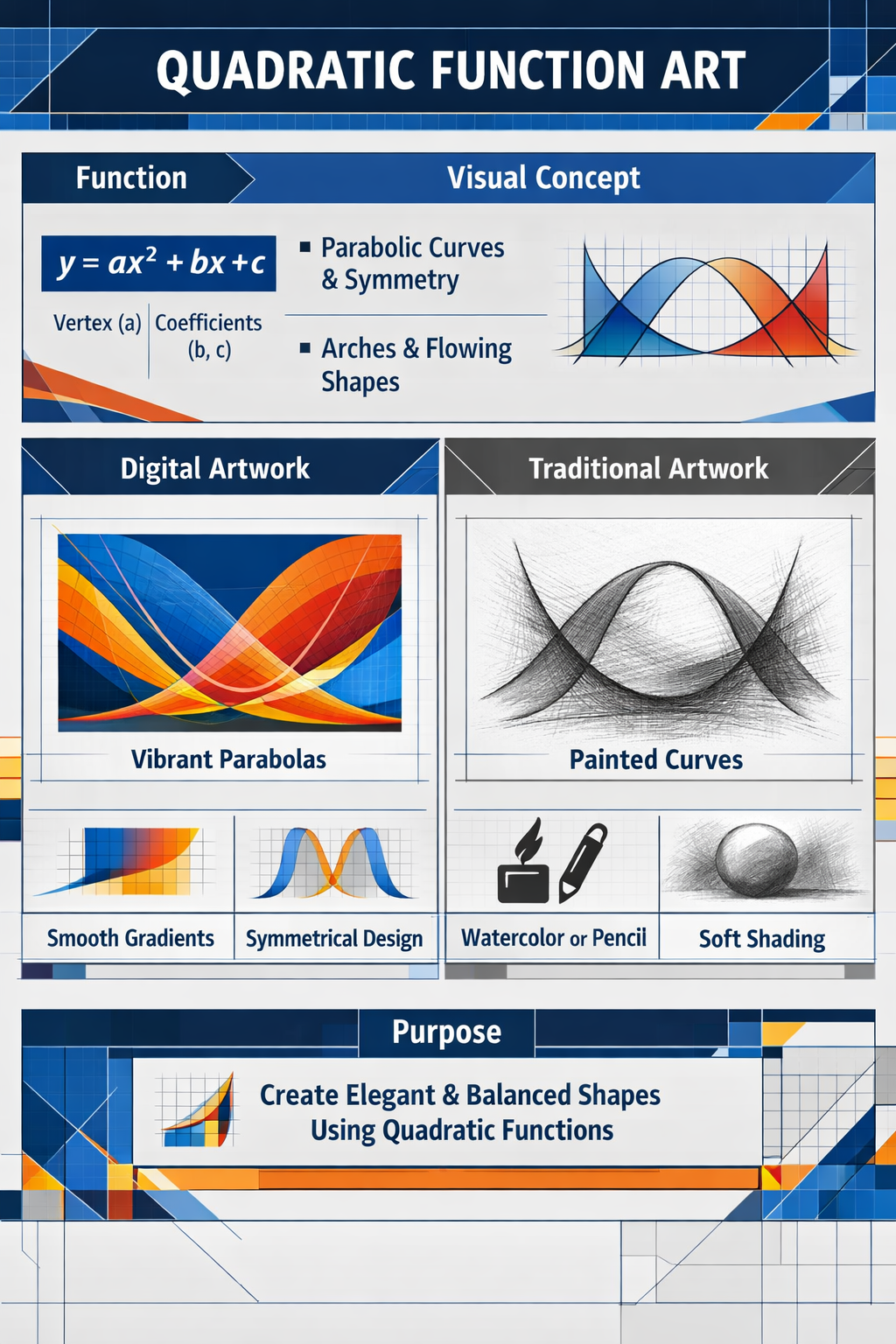
| Quadratic Art | y = ax² + bx + c | Digital + Traditional | Parabolas | Flow, symmetry |
| Trigonometric Art | sin, cos | Digital + Traditional | Amplitude, frequency | Rhythm, waves |
| Exponential/ Log Art | a^x, log(x) | Digital + Traditional | Growth/decay | Contrast, movement |
| Transformation Art | Any function | Digital + Traditional | Shifts, reflections | Variation, complexity |
| Capstone Artwork | Combined functions | Any medium | Integration | Unified mathematical art |
Infographs
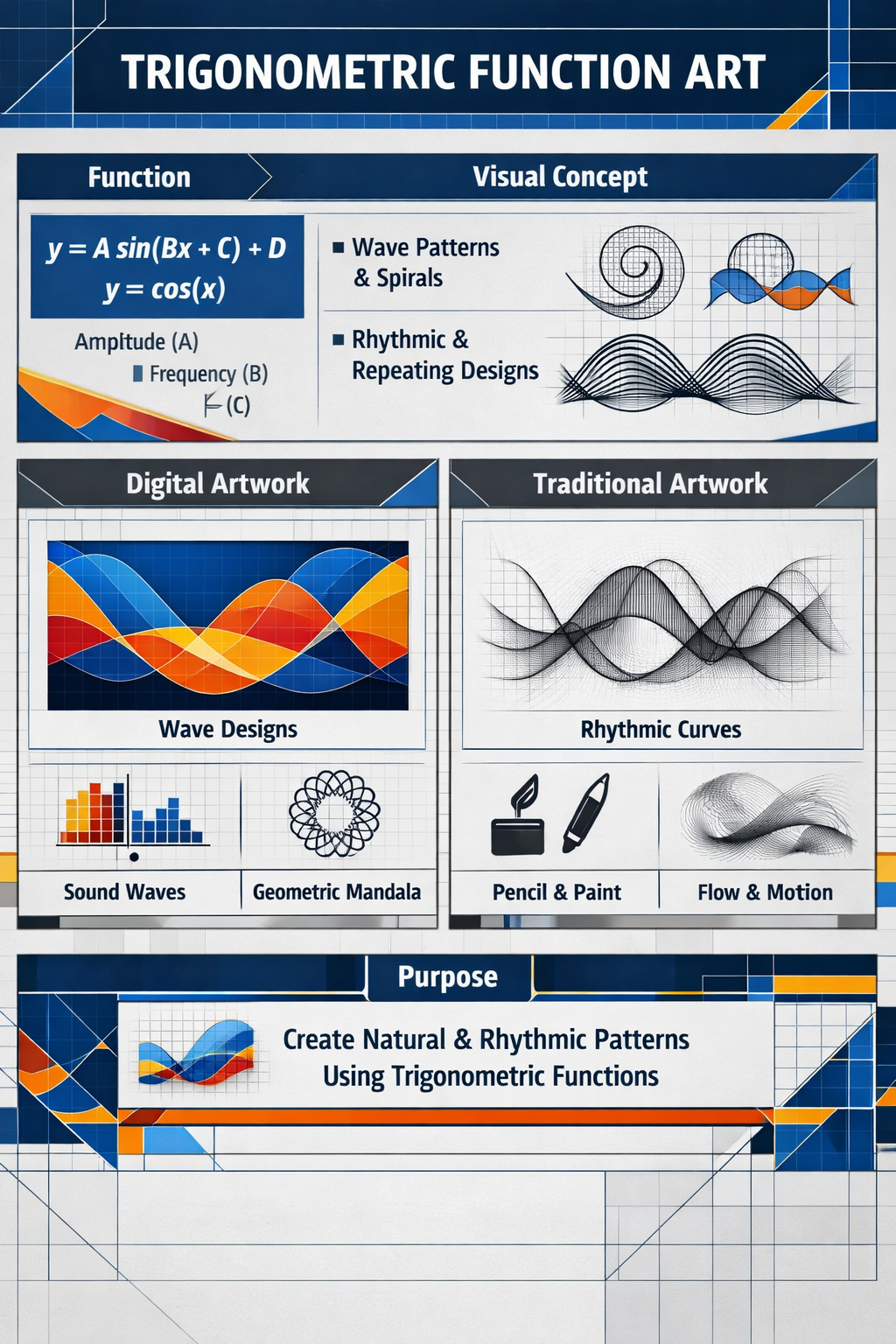
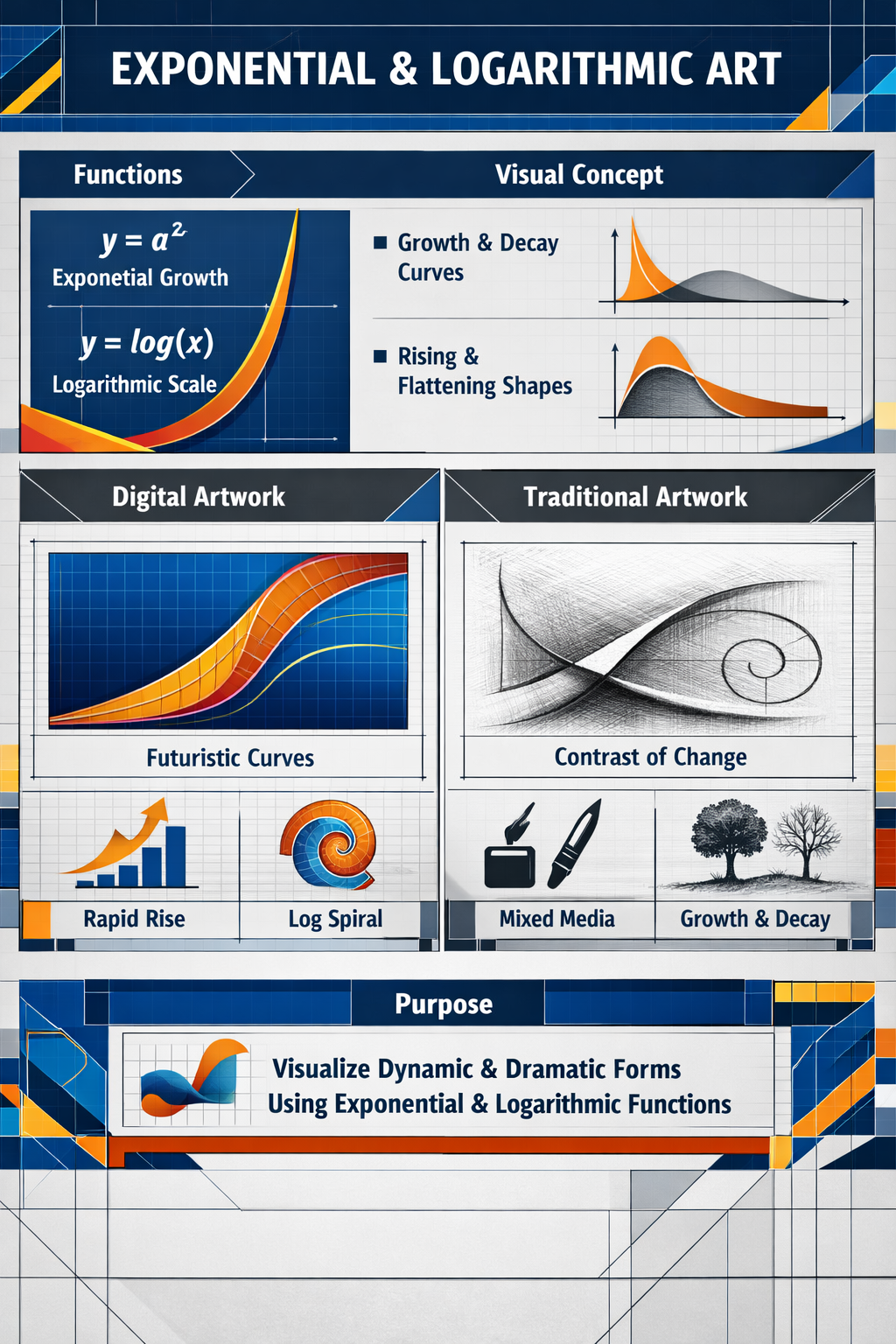
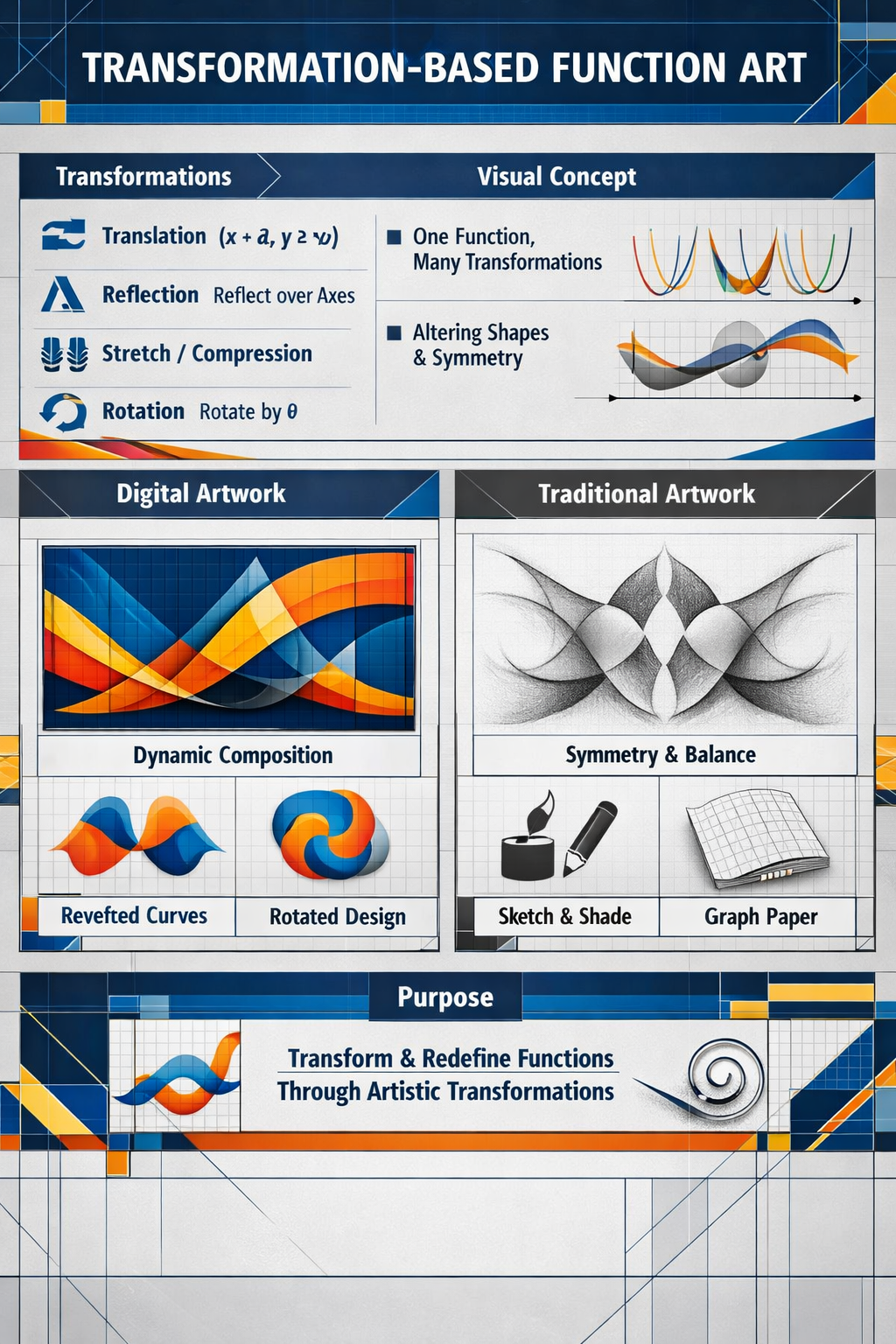
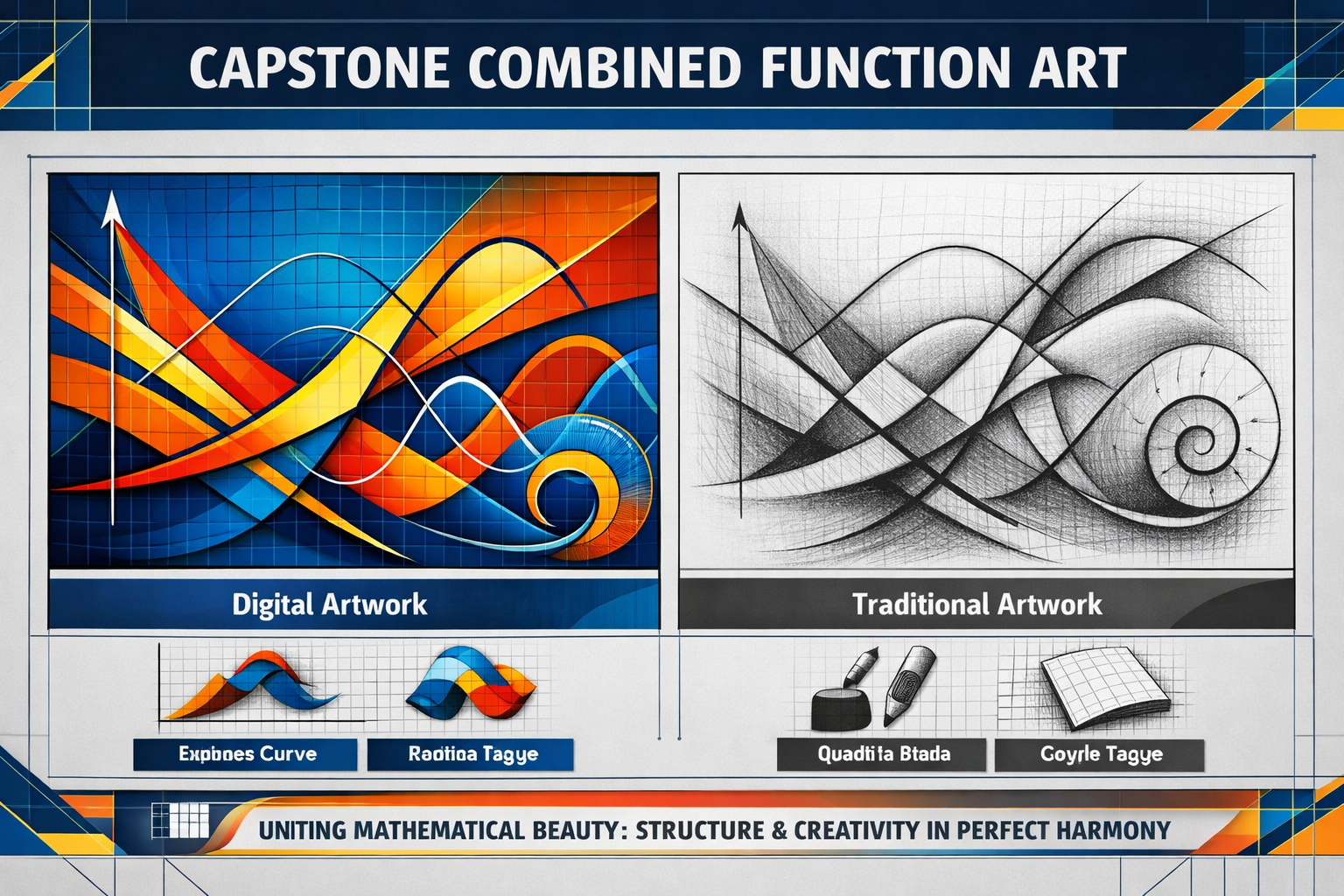
My Research questions:
- How can mathematical functions be used to create artistic designs? Functions can generate curves, patterns, and shapes that serve as the foundation of both digital and traditional artworks.
- Which types of functions produce the most visually appealing patterns? Trigonometric, polynomial, exponential, and logarithmic functions each create unique visual effects.
- How does changing parameters in a function affect the artwork? Adjusting amplitude, slope, frequency, or shifts changes the shape and movement of the graph, altering the final design.
- Can mathematics enhance creativity in art and design? Yes — math encourages experimentation, precision, and innovation, expanding artistic possibilities.
Reflection
Through this project, I learned that mathematics is much more than solving equations and finding answers. It can also be a powerful tool for creativity and artistic expression. As I explored different mathematical functions, I discovered how graphs, patterns, and transformations can be used to create unique and visually appealing designs. I was surprised by how small changes in an equation could produce completely different shapes, movements, and effects.
This experience helped me appreciate mathematics from a new perspective. Instead of seeing it only as a challenging academic subject, I learned to view it as a source of inspiration for art and design. It showed me that creativity and logical thinking can work together, and that some of the most beautiful patterns in art are connected to mathematical principles. Through this project, I gained a deeper understanding of both mathematics and art, while developing my creativity, problem-solving skills, and attention to detail.
Conclusion
In conclusion, this project demonstrates that mathematics and art are closely connected through patterns, structure, and design. By exploring mathematical functions and transformations, I learned how equations can be transformed into creative visual artworks. The process of experimenting with graphs and creating designs allowed me to better understand mathematical concepts while strengthening my artistic skills.
More importantly, this project showed that mathematics can be creative, meaningful, and relevant to the field of art and design. It highlights how mathematical thinking can support artistic expression, precision, and innovation. Through this experience, I developed a greater appreciation for both subjects and learned that combining creativity with logic can lead to new ideas, discoveries, and artistic possibilities.
Thank you very much.
Authored by Mikaela Jasmine Villanueva
Grade 11 Arts and Design Student ; Homeschool Global - VCIS