Art Materials & Sustainability
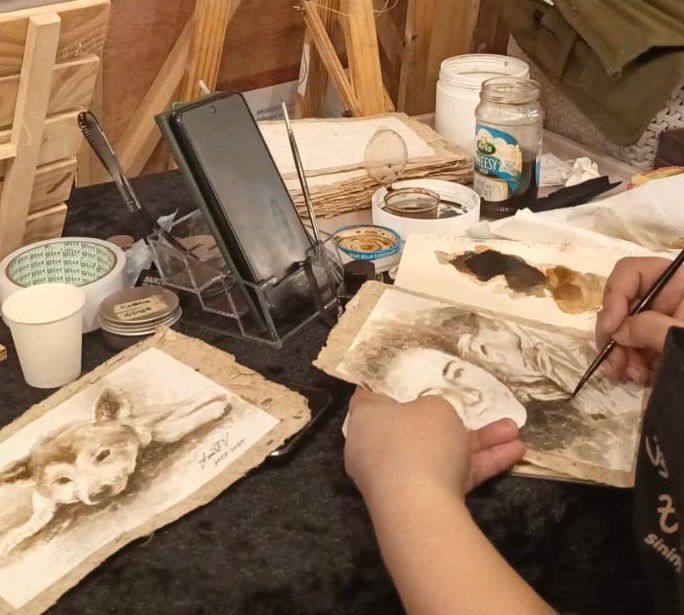
Coffee Pigment Art on Abaca paper by Anninag
Introduction
In Physical Science, we learn how matter, energy, and materials behave, and this knowledge helps us understand the world around us including the art materials we use every day. The article “Sustainability in Art: Using Eco‑Friendly Materials” shows that many traditional art supplies contain chemicals or substances that can harm the environment. By studying the properties of pigments, solvents, and other materials in Physical Science, we can better understand why some materials are toxic, how they break down, and what makes certain options safer or more sustainable. This connection between science and art helps students make smarter choices. Learning about atoms, chemical reactions, and material composition allows us to see why natural pigments, recycled paper, and non‑toxic mediums are better for both our health and the planet. Physical Science teaches us to think critically about the materials we use, while sustainability challenges us to apply that knowledge responsibly. Together, they show that being an artist today means being creative and environmentally aware at the same time.
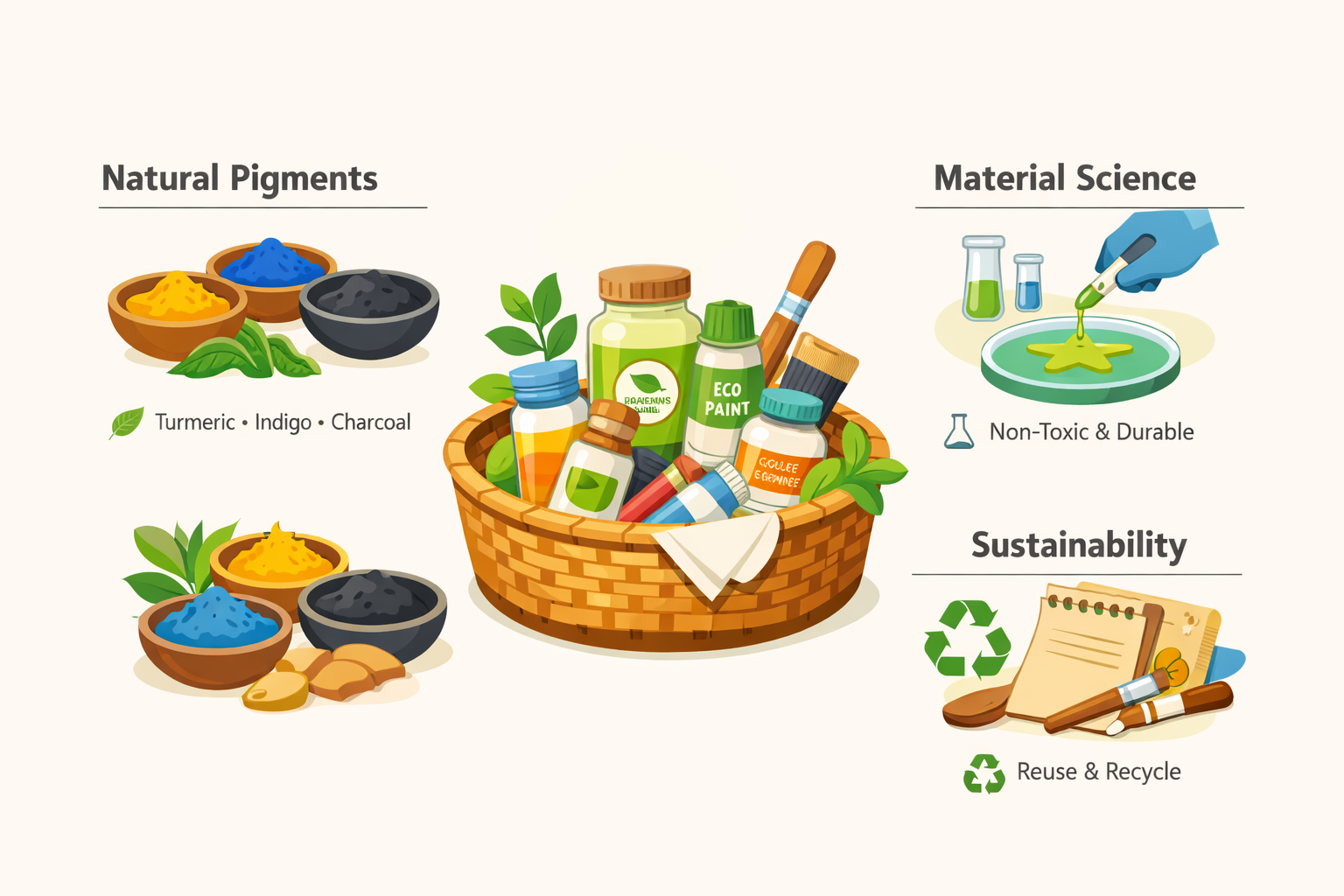
On a Personal Note
As a young artist studying Physical Science, the article “Sustainability in Art: Using Eco‑Friendly Materials” made me realize how important it is to understand the science behind the materials I use. I used to think art was simply about creativity and expression, but now I see that every material such as paint, paper, glue, or pigment, has a chemical makeup and an environmental impact.
The article explains that many traditional art supplies contain harmful substances, and this connects directly to what we learn in Physical Science about toxicity, chemical reactions, and how materials break down in the environment. What stood out to me is how simple choices can make a big difference.
For example, using natural pigments from plants or minerals reduces chemical waste, and choosing recycled paper helps lessen the demand for new raw materials. This idea is supported by the Tate Museum, which explains that sustainable art is not just a trend but a movement that encourages artists to think about the life cycle of their materials; from where they come from to where they end up. It made me reflect on how often I throw away scraps, dried paint, or plastic packaging without thinking about where it goes.
Earth.org also discusses how artists around the world are shifting to eco‑friendly practices, not only to protect the environment but also to inspire others. This made me realize that sustainability is not just a scientific concept, it is a responsibility. As students, we are taught about atoms, molecules, and chemical properties, but applying that knowledge in real life is what makes learning meaningful. Understanding the science behind materials helps me choose safer, non‑toxic options and avoid products that contribute to pollution.
Overall, the article and the additional references helped me see that being an artist today means being aware of the impact of my choices. Sustainability is not about limiting creativity, it actually encourages innovation.
By exploring natural pigments, recycled objects, and eco‑friendly tools, I can create art that reflects both my creativity and my values. This research made me more conscious of how science and art work together, and it motivates me to practice sustainability not only in my artwork but also in my daily life.
Read More: https://www.artsloth.in/post/sustainability-in-art-using-eco-friendly-materials
Through this research, I learned that the materials we use in art are not just creative tools, they are real substances with chemical properties, environmental impacts, and scientific explanations behind them. As a matter of fact a lot of commercially produced art supplies contain chemicals that can harm both people and the environment, and this made me more aware of how important it is to choose safer, eco‑friendly options. I also found out that natural pigments, recycled paper, and non‑toxic mediums are not only better for the planet but also connect directly to what we study in Physical Science, like atoms, bonding, reactions, and the behavior of light.
I firmly believe that sustainability is not just a trend but a responsibility. Understanding the science behind materials helped me see why some products are toxic, why certain pigments fade, and why some substances break down faster than others. This made me realize that being an artist today means thinking about where materials come from, how they are made, and what happens to them after we use them. Most importantly, I learned that small choices like reusing tools, reducing waste, and choosing natural materials can make a big difference in protecting the environment while still allowing me to express my creativity.
Conclusion
In conclusion, studying sustainability in art through the lens of Physical Science helped me understand the deeper connection between creativity and environmental responsibility. The science topics we learned such as chemical reactions, atomic structure, intermolecular forces, and the behavior of light gave me a clearer understanding of how art materials work and why some are safer than others. The research showed me that sustainable art is not only possible but necessary, especially in a world facing pollution and climate challenges. By applying scientific knowledge to my artistic choices, I can create work that is meaningful, responsible, and environmentally conscious. This experience taught me that science and art are not separate they work together to help us make better decisions for ourselves and for the planet.
More information here:
APA 7th Edition Citation
Tate Museum. (n.d.). Sustainable art: What it is and why it matters. https://www.tate.org.uk/art/art-terms/s/sustainable-art
Earth.org. (n.d.). Eco‑friendly art: How artists are reducing their environmental impact. https://earth.org/eco-friendly-art/